A holiday on the calendar can look simple, yet the legal meaning behind it can shape pay, staffing, court deadlines, banking cutoffs, and travel plans. Two labels cause the most confusion, bank holiday and public holiday. They overlap in everyday chat, but they are not always interchangeable. The distinction sits in law, regulation, and custom, and it changes from country to country.
Key takeaway
Bank holidays are days when banks and certain financial systems pause or run reduced services, often set by banking regulators or tradition. Public holidays are days recognized by government for the wider public, often affecting schools, many workplaces, and public services. Some dates are both, some are only one, and some depend on region or industry. The safest approach is to check the legal source and the practical impact on closures, pay rules, and deadlines.
A Short Quiz To Test Your Holiday Instincts
This quiz is built to help you spot the practical difference in real situations. Pick an answer, then check the explanation.
Holiday reality check
1) A government announces a public holiday for a national election day. What is most likely to change immediately?
2) A date is listed as a bank holiday. Which impact is the best first guess?
3) A country has a public holiday, but banks remain open. What is the most plausible explanation?
Score: 0 out of 3
What Each Term Really Means In Practice
Definitions sound tidy until you try to apply them to payroll, trading, school schedules, or cross border shipping. A useful way to think about it is scope and authority.
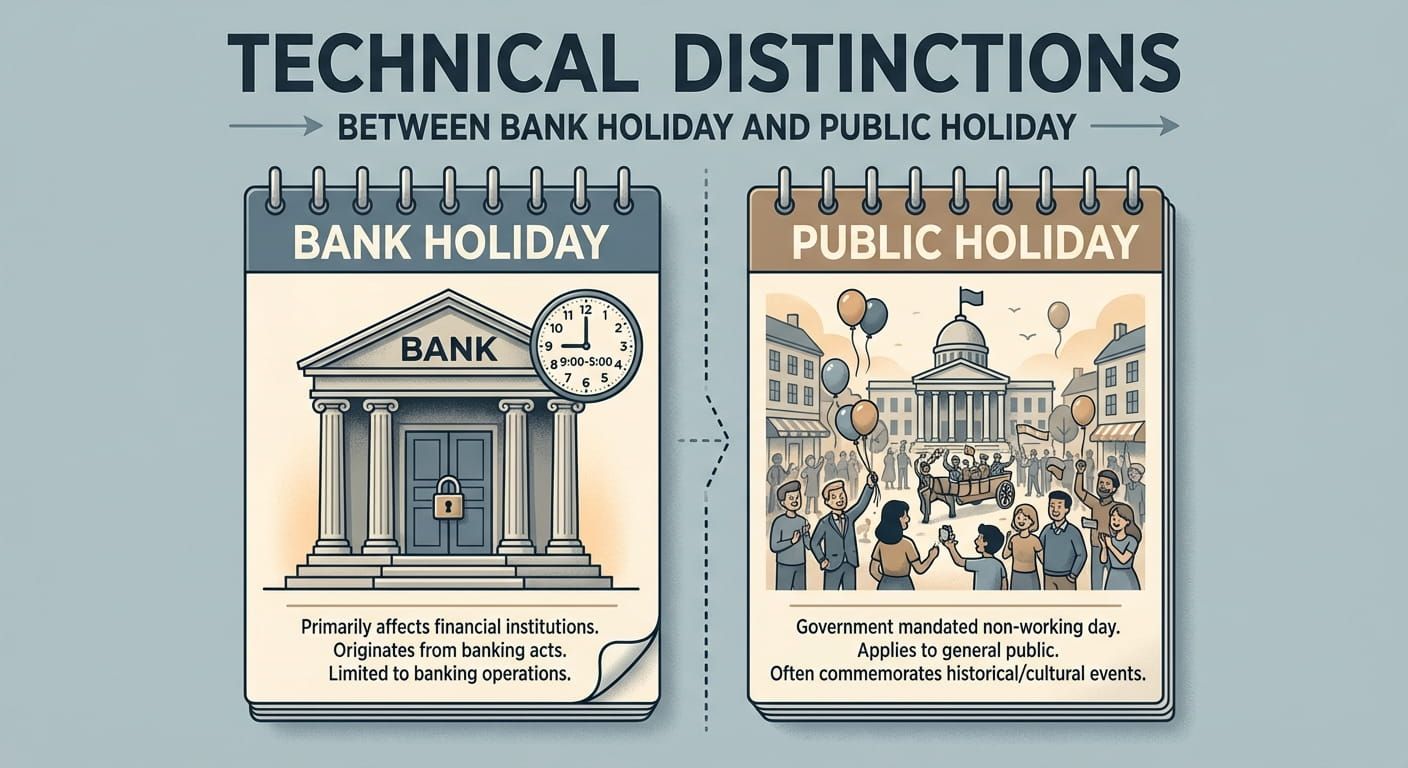
A public holiday is typically declared through a government process. It is meant for the general population, even if not everyone gets the day off. A bank holiday is a banking and finance concept, a date when the banking sector is closed or running reduced operations, often tied to settlement systems and regulatory calendars.
Plain language version
Public holiday asks, is society officially observing this day. Bank holiday asks, are banks and payment rails treating this day as closed time.
A Colorful Comparison Table That Clears Up The Confusion
Why The Same Date Can Be Both Or Neither
A single date can carry multiple labels because different systems are making different choices. A government may declare a public holiday for a national event. Banks may choose to close, either because law instructs them to, or because clearing and settlement systems treat the date as non business.
The reverse also happens. Banks may close due to market convention or operational need, while the rest of society carries on. That is where people start asking, why is the bank closed if it is not a public holiday. The answer is usually that the bank is aligning with payment rails, central bank operations, or risk controls.
The Legal Layer That Usually Decides The Label
If you want the most reliable definition, go to the legal or regulatory source. Public holiday language often appears in labor statutes, administrative law, and education policy. Bank holiday language often appears in financial regulation, central bank notices, and market rules.
That sounds abstract, but it shows up in everyday details:
- Deadlines, courts, tax filings, and government submissions may roll to the next working day on a public holiday.
- Bank cutoffs, wire processing times, and settlement schedules may roll to the next banking business day on a bank holiday.
- Employment rules, premium pay, substitute days off, and scheduling protections often reference public holiday status, not bank holiday status.
Quote to keep in mind
A public holiday shapes public life. A bank holiday shapes money movement. Your plan needs both truths.
A Simple Checklist To Classify Any Holiday
You can usually sort a date in a few steps. This helps if you are planning payroll, deliveries, or an international trip.
- Check who declared it. Look for a government announcement, law, or official calendar. If it appears in official holiday lists for the country, it is likely public.
- Check whether banks list it. Banking calendars sometimes include extra closures tied to clearing and settlement. These dates can matter even when shops stay open.
- Check regional scope. Some countries have national and regional holidays. A date can be public in one region and a regular day in another. This is common in federal systems and places with strong local observances.
- Check work rules in the relevant sector. Retail, healthcare, and hospitality often have different staffing needs. Your employment agreement may treat certain public holidays differently.
- Check practical closures. Public transport, museums, government offices, and schools can follow different patterns, even on the same date.
If you want a fast way to scan upcoming observances across countries, the global holiday directory helps you see what is coming in the next thirty days, with names and dates tied to each country.
Bank Holidays, Payment Systems, And The Hidden Clock Behind Transfers
Most people notice a bank holiday when a branch is shut. The bigger impact is often invisible, clearing and settlement timing. Even if online banking looks available, the back end rails can be paused. That can shift when a payment truly arrives, when a card settlement posts, or when a payroll batch completes.
Common ripple effects include, card settlement posting later, wire cutoffs moving earlier on the prior day, and foreign exchange settlement shifting to the next banking business day. This is why finance teams keep separate calendars for banking and public observance.
What stays open on many bank holidays
- Online account access and balance viewing
- Card purchases and ATM cash withdrawals
- Some instant payment rails, depending on country design
What often shifts on many bank holidays
- Wire transfers and cross border remittance settlement timing
- Business day interest calculations and cutoffs
- Market trading hours for certain venues
Public Holidays, The Wider Social Contract
Public holidays are social signals as much as legal ones. They are built around shared memory and shared rest. National days, religious observances, and major cultural festivals tend to fall into this bucket, though the details vary. One country may treat a religious date as a full public holiday, another may treat it as optional leave, and another may recognize it only for certain communities.
Public holiday status can also drive closures and staffing patterns in a way bank holiday status usually does not. Schools often follow the public list. Many government services do too. Private businesses decide based on customer demand, labor rules, and tradition.
Quote to keep in mind
A public holiday can be a day off, a day of remembrance, or a day of community, even when the city keeps moving.
Regional And Local Holidays, Where Most Misunderstandings Begin
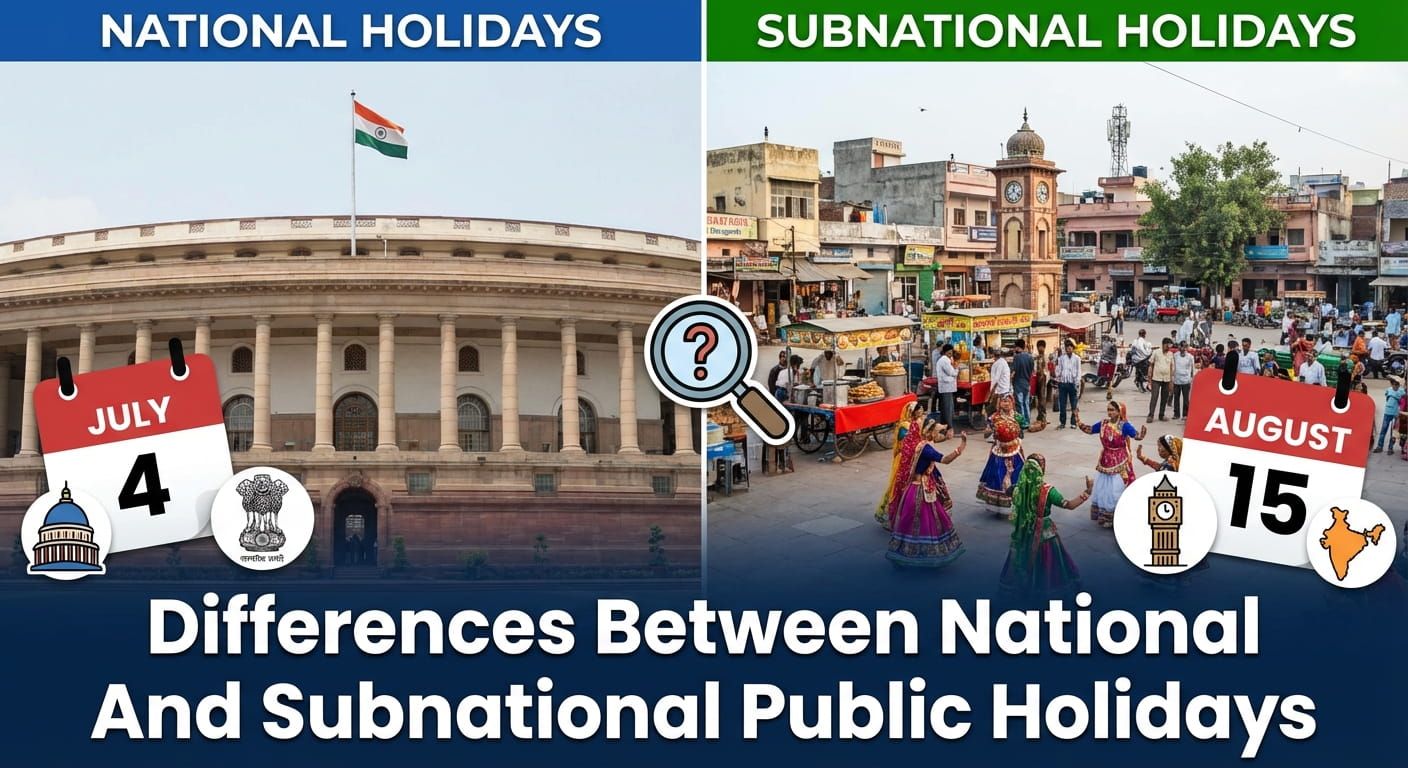
Some places have a single national list. Many do not. A region may add a local day that matters deeply, yet has little impact elsewhere. That creates a patchwork, especially for companies operating across multiple cities or provinces. If you are building schedules or planning a trip, it helps to understand the difference between national and regional observances.
A focused breakdown of how national and regional observances differ is covered in national vs subnational public holidays, and it is a useful reference when you are planning beyond one city.
Weekend Substitution Rules And Observed Days
A holiday can land on a weekend. Some countries move the day off to a nearby weekday. Some keep it on the weekend and offer no substitute. Some create a substitute only for certain sectors. That is why you will see language like observed holiday in many calendars.
Weekend substitution can also create a gap between labels. A public holiday may be observed on Monday, while banking systems may treat either the original date, the observed date, or both as special depending on local rules. If you want examples of how observed days are handled, weekend public holiday rules walks through patterns you will see around the world.
Real World Scenarios That Show The Difference
Scenario 1, payroll and payday timing
A company schedules payroll to land on a Friday. A bank holiday falls on that Friday, but it is not a public holiday. Employees still go to work. The payroll file may be accepted, yet settlement can land on Monday. Staff see the delay and assume payroll failed, when the rails were simply closed time.
Scenario 2, travel planning and closures
A public holiday can reshape a city. Museums may close, attractions may sell out, and transit may run a reduced timetable. A bank holiday might not change the city vibe much, but it can affect currency exchange counters, bank branches, and card settlement timing for hotels and car rentals.
If travel logistics are your focus, public holiday closures travel logistics maps the kinds of disruptions travelers actually feel.
Scenario 3, cross border teams and deadlines
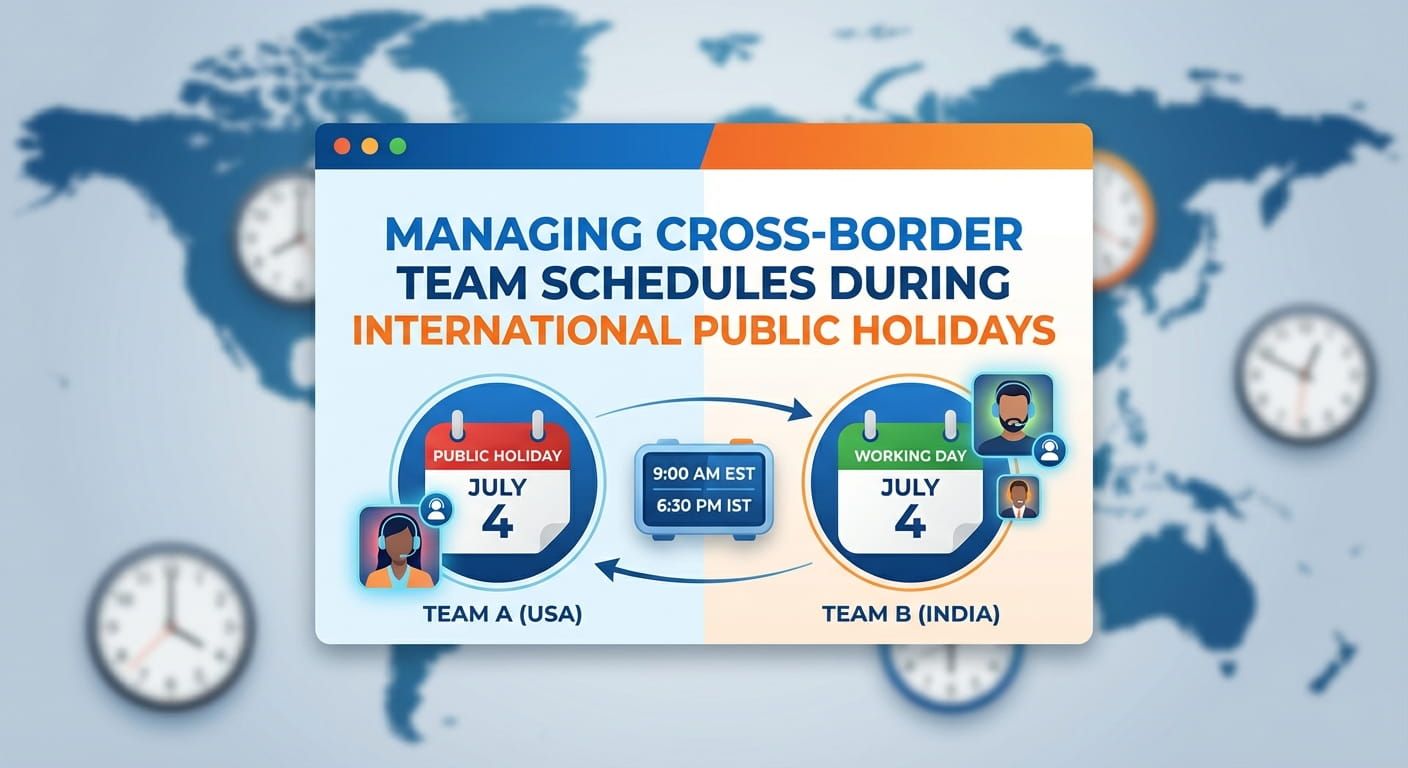
A team in one country is on a public holiday. Another country is on a normal workday, but their banks are on a bank holiday. Meetings can still happen, yet payments, contract countersignatures, or fee transfers can stall. This is where calendars must show both kinds of closure.
If you manage distributed schedules, managing cross border team schedules international public holidays is a practical read, with ideas for shared calendars and handoffs.
How Time.so Helps You Avoid Holiday Surprise
Holiday planning fails when people rely on a single label. A calendar that only says holiday is not enough if you need to know what actually closes. The point of a directory is to ground your plan in dates, names, and where the observance applies.
If you want a clear country view for a concrete example, Singapore calendar holidays shows how one place presents its list, which is handy for school planning, travel timing, and work scheduling.
Common Myths That Keep Showing Up
A few assumptions cause most of the confusion. Here are the ones worth dropping.
- Myth: bank holiday means everyone has the day off. Reality: it often targets the finance sector and related operations.
- Myth: public holiday means everything is closed. Reality: many essential services and retail businesses stay open, sometimes with different hours.
- Myth: online banking always means money moves. Reality: you can initiate a transfer, but settlement can still wait for the next banking business day.
- Myth: a single national list covers everything. Reality: regional holidays and observed day rules can change what happens in a specific city.
Practical Tips For People Who Need The Right Answer, Not A Label
If you only remember one thing, remember the job you are trying to do. Then pick the calendar that matches that job.
- Planning pay or invoicing, check bank closure dates and settlement cutoffs.
- Planning staffing, check public holiday rules and your local labor framework.
- Planning a trip, check public observance, closures, and transport schedules.
- Planning across regions, confirm whether the holiday applies nationally or locally.
A Final Way To Think About The Technical Distinction
Public holiday and bank holiday describe two different kinds of pause. One is society facing, rooted in civic life and official observance. The other is finance facing, rooted in how money actually moves through regulated systems. Many dates sit in the overlap, and that overlap makes the terms feel interchangeable. The days that sit outside it are the ones that cause missed deadlines, confused customers, and messy travel days. Keep two questions in your head, what closes for people, and what closes for payments, then plan with both in view.