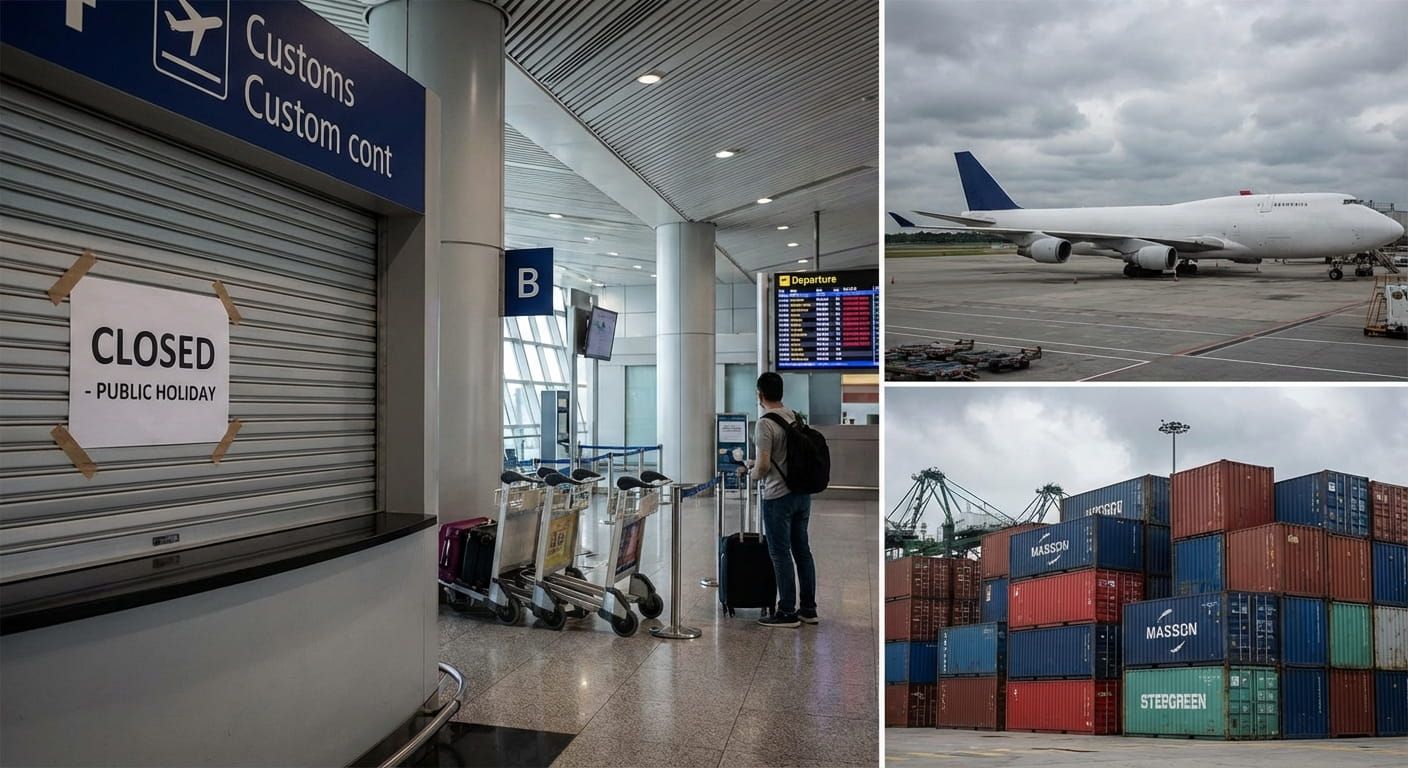
A public holiday can feel harmless on a calendar, until a passport line stretches down a terminal, a customs desk goes quiet, and a warehouse gate stays shut for the day. International travel and logistics run on handoffs between people, offices, and systems. Holidays change those handoffs. Flights still fly, yet the humans and services around them may slow down or pause. The result can be missed connections, delayed paperwork, and shipments that sit one extra night in the wrong place.
Public holiday closures reshape the real timetable of international trips and shipments. Airports and ports may operate, yet passport control, customs processing, banks, couriers, and supplier offices can run limited hours or close entirely. That affects visa timing, check in support, baggage recovery, cargo release, and last mile delivery. The safest plan blends holiday awareness with buffers, alternate routes, earlier cutoffs, and clear communication across time zones and teams.
Holiday Closure Reality Check Quiz
Answer five questions and get instant feedback. This is built for travelers, shippers, and anyone coordinating work across borders.
How A Holiday Turns Into A Travel Disruption
Airports, rail stations, and highways rarely shut down just because it is a public holiday. The pinch points are the services wrapped around movement. Think staffing, paperwork, and local transport. If a country closes government counters, immigration support can slow. If bank transfers pause, a supplier might not release goods. If a destination city has reduced metro service, a late arrival becomes a scramble.
Holiday pressure also stacks up. The day before a closure can be overloaded. The day after can be a backlog day. That is why travelers get long lines even if their flight is on time, and why a shipment can land on schedule yet fail to move onward.
Travel delays often come from people queues. Logistics delays often come from document queues. Public holidays shrink both staffing pools at the same time.
The Closures That Hit Travelers Most Often
Holiday closures can show up in surprising places. Many travelers plan flights and hotels, then forget the supporting errands that make the trip work. A few common examples follow.
- Visa and permit offices: some destinations need in person biometrics or document checks, holiday closures can push appointments.
- Local transport counters: tourist passes, rail offices, and city card pick ups can run limited hours.
- Money services: banks can close, some exchange counters reduce staffing, and business payment cutoffs arrive earlier.
- Museums and attractions: some close, some are packed, both outcomes change your timing.
- Customer support: airlines and hotels may keep call centers open, yet local partners can be off duty.
A strong habit is checking upcoming dates early. A calendar view that shows what is coming in the next month helps you avoid surprises. Time.so keeps that flow simple inside its global holiday directory, which is useful when your itinerary crosses several borders.
The Logistics Chain Reactions Behind The Scenes
Logistics is a relay. Cargo moves through handoffs, and many handoffs require an office to stamp, release, or schedule something. A holiday can pause that office even if the physical infrastructure is still running. The most common pressure points include customs, bonded warehouses, freight forwarding desks, and local delivery depots.
Here is what that looks like in real life. A pallet lands at an airport cargo terminal. The terminal is open. The customs officer team is smaller. Your broker is closed. The importer is off. The release sits. Storage fees may begin. A trucking slot disappears. The next available slot is tomorrow, and tomorrow is already crowded.
A Table That Maps Closures To Typical Impacts
Use this table as a quick scan. It connects the type of holiday closure to what travelers and shippers tend to feel, plus a practical move that reduces the pain.
National Holidays, Regional Holidays, And Why They Feel Different
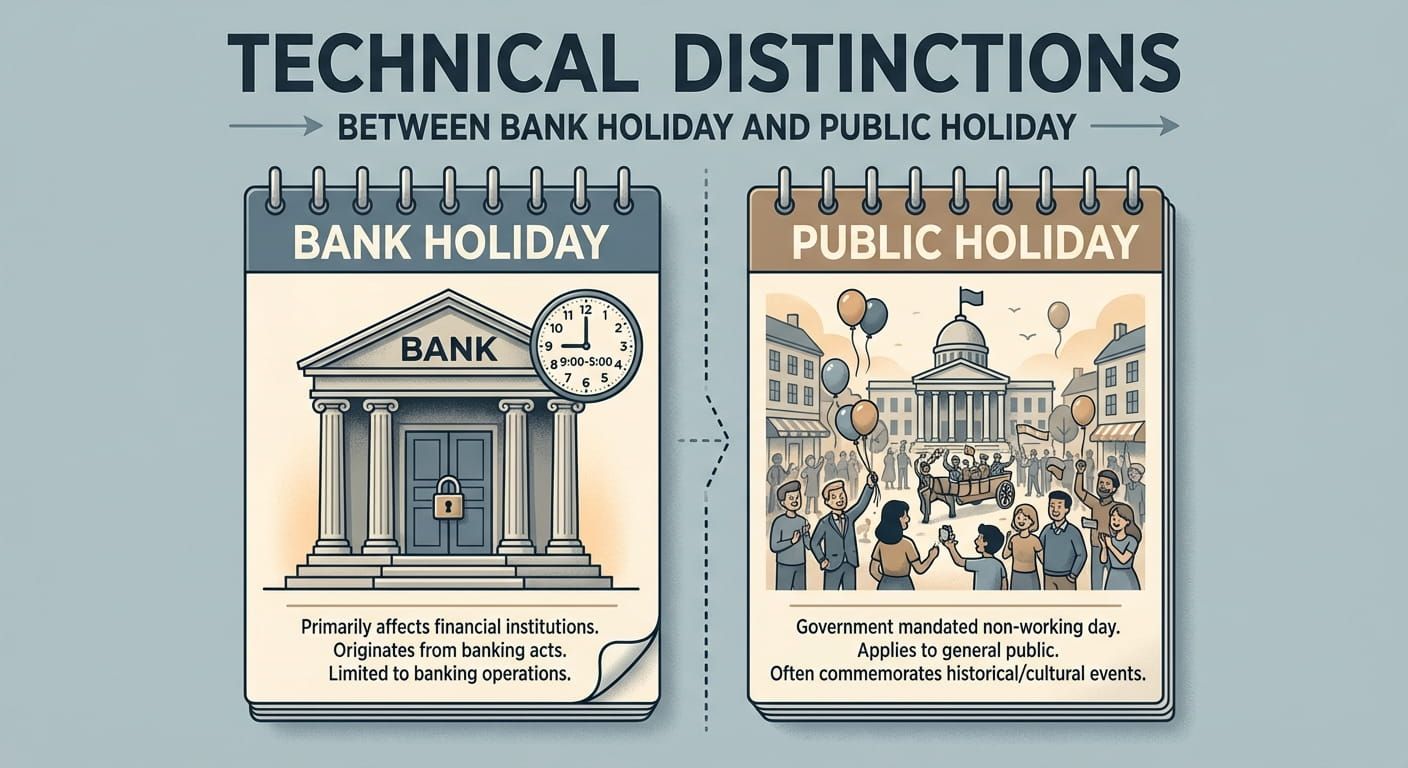
Not every public holiday shuts down a whole country. Some are national, others apply only to specific states, provinces, or cities. That difference matters if you are moving goods across internal borders, or traveling across a large country with regional rules. A truck route can cross a region that is closed while the destination region is open. A traveler can land in a city with a local closure even though the rest of the country looks normal.
A clear explanation of this split helps planning, and national vs subnational public holidays breaks down how these layers show up on calendars. Keep an eye on regional variations for major federations, large islands, and territories with their own observance rules.
Weekend Observance Rules Can Shift The Real Day Off
A holiday date on paper is not always the day that offices close. Some places move the day off to Monday when the official date lands on a weekend. Others add a substitute day, or shift the time off to Friday. These rules change travel crowds and business closures in ways that surprise even frequent flyers.
If you want a deeper feel for how those patterns vary, weekend public holiday rules offers examples that highlight the difference between the named holiday and the observed closure day. For logistics, observed days often matter more than the ceremonial date because staffing and banking follow observed closures.
The Places With Many Public Holidays Create Dense Slowdown Periods
Some countries have more public holidays than others. That does not automatically mean constant disruption, yet it does create clusters where closure risk is higher. From a travel angle, those clusters can mean packed trains and expensive lodging. From a logistics angle, they can mean fewer working days to meet month end targets.
If you are comparing markets for planning, countries most public holidays can give useful context. Pair that with your own seasonal knowledge, because a single major holiday week can have a bigger impact than several minor single day observances spread out across the year.
Practical Planning Moves That Reduce Holiday Risk
Holiday planning does not need to be stressful. It just needs to be specific. These steps work for both international travel and global shipping because both depend on timing, documents, and local service availability.
- Check holiday calendars for every stop and handoff. Look at departure, transit, and arrival countries, plus any port or hub country involved.
- Add buffer time where humans touch the process. Immigration desks, customer service, brokers, warehouse release, and local couriers can all be slower.
- Move paperwork earlier than you think you need. Aim to submit documents before the last business day rush that happens ahead of holidays.
- Confirm operating hours in writing. Hotels, transfer companies, receiving docks, and brokers should confirm holiday hours, not just normal hours.
- Pick smarter arrival times. Early arrivals give you more options if a service is closed, late arrivals reduce your ability to pivot.
- Prepare backup routes. If a hub is likely to be overloaded, alternate hubs can save a day.
- Stock essentials. Travelers pack meds and adapters, shippers keep critical spares and packaging material on hand.
- Communicate across time zones. A closed office can still respond the next day if the message arrives before the holiday begins locally.
List Of High Impact Scenarios You Can Spot Early
These scenarios show up again and again, across regions and industries. Spotting them early makes planning smoother.
- Major national day travel waves: high passenger volume plus reduced staffing in supporting services.
- Religious observance periods: changing business hours, altered weekend patterns, and heavy outbound travel.
- Golden week style clusters: multiple holidays close together, creating backlogs that spill into the following week.
- Port city local holidays: terminals open, surrounding transport and offices slow down.
- End of year closures: not always official holidays, yet many offices use leave, creating a similar slowdown.
- School holiday overlap: family travel surges can collide with public holiday closures.
- Policy driven closures: special one off days announced close to the date, often leading to last minute scheduling changes.
- Local strike or reduced service days near holidays: holiday timing can amplify the impact.
- Territory specific observances: islands and territories can have unique days off even within a larger country.
- Multiple country itineraries: each border adds another set of closures and queues.
Country Examples That Show The Pattern Clearly
Real planning gets easier with examples. A traveler heading to Japan during peak holiday periods can see transport and accommodation pressure build quickly, and checking Japan holidays early supports smarter booking and better connection planning.
In the United States, national holidays are only part of the story. State level observances and local closures can affect office hours and service availability in specific regions. Planning with United States holidays helps you avoid assuming one uniform nationwide shutdown pattern.
Singapore sits at the crossroads of regional travel and trade. Public holidays can influence local bank cutoffs, warehouse staffing, and city movement patterns, even while the port and airport infrastructure stays active. Checking Singapore holidays can help both travelers and operators align arrival windows with local support availability.
China can see large demand shifts around major holiday weeks. The travel surge is visible, and the logistics ripple is visible too, especially for suppliers and factories. A glance at China calendar holidays can help you plan production timelines and booking lead times more realistically.
In the United Arab Emirates, weekend patterns and observance rules can differ from what visitors expect, which changes office schedules and cutoffs. Checking United Arab Emirates holidays helps align meetings, freight handoffs, and delivery promises.
Managing Teams And Partners Across Borders During Holiday Weeks
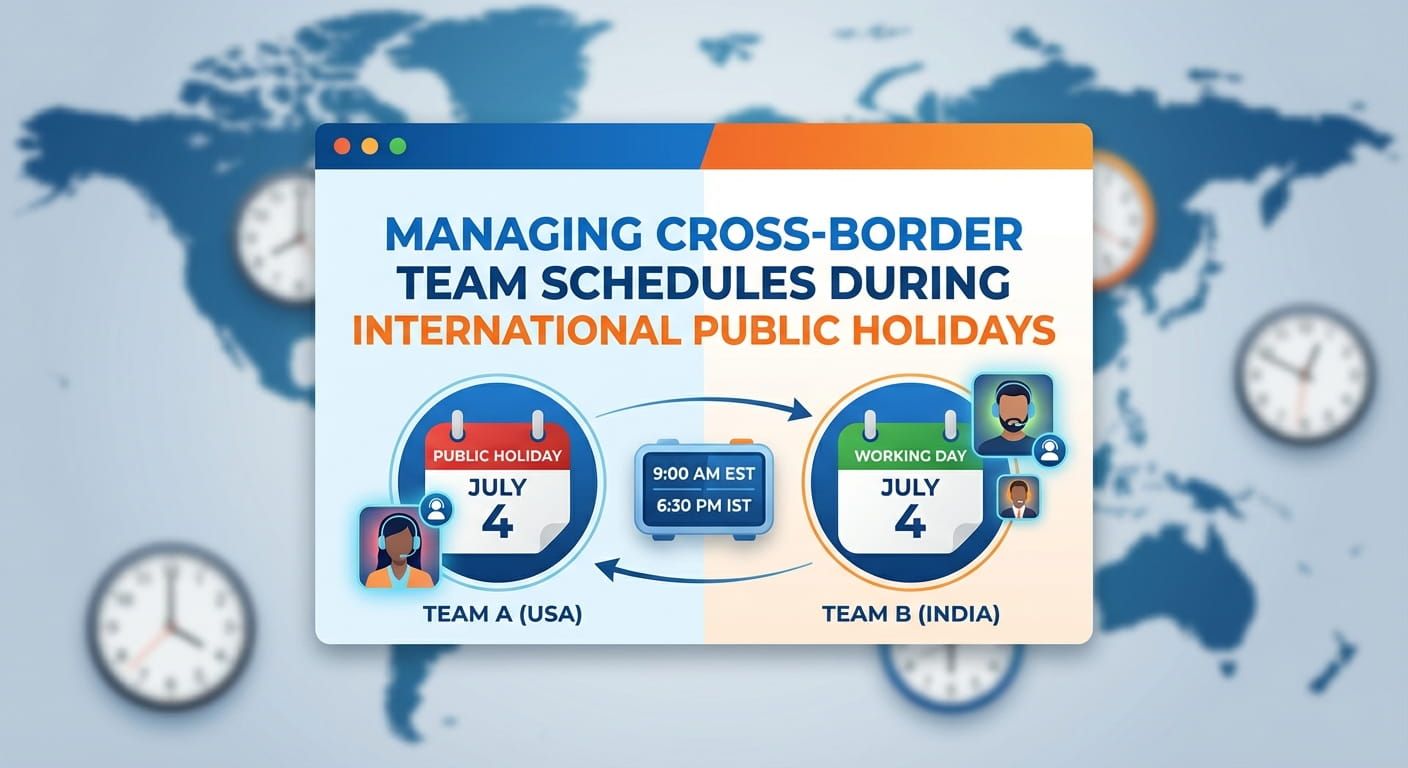
Coordination becomes harder when only part of the chain is off. One team might be working normally while another is on a day off. That mismatch creates delays in approvals, shipment releases, itinerary changes, and support escalations.
A simple approach works well: define who is on call, what must be decided before the holiday, and what can wait. For cross border work, it helps to align handoffs around a shared calendar view, and managing cross border team schedules international public holidays offers practical ways to keep projects moving without burning people out.
Short Bullet Checklist For The Week Before A Holiday
Use this as a final pass before you travel or dispatch. Each bullet is small, yet together they prevent the most common holiday surprises.
- Confirm local opening hours for hotels, transfers, brokers, and receiving docks
- Move document submissions and payments earlier than usual
- Build extra connection time and avoid the last flight of the day if possible
- Prebook ground transport where holiday schedules might reduce service
- Notify partners of your cutoff times and escalation contacts
The holiday itself is rarely the only risk. The day before and the day after create the biggest queues.
How To Use A Holiday Directory Without Overthinking It
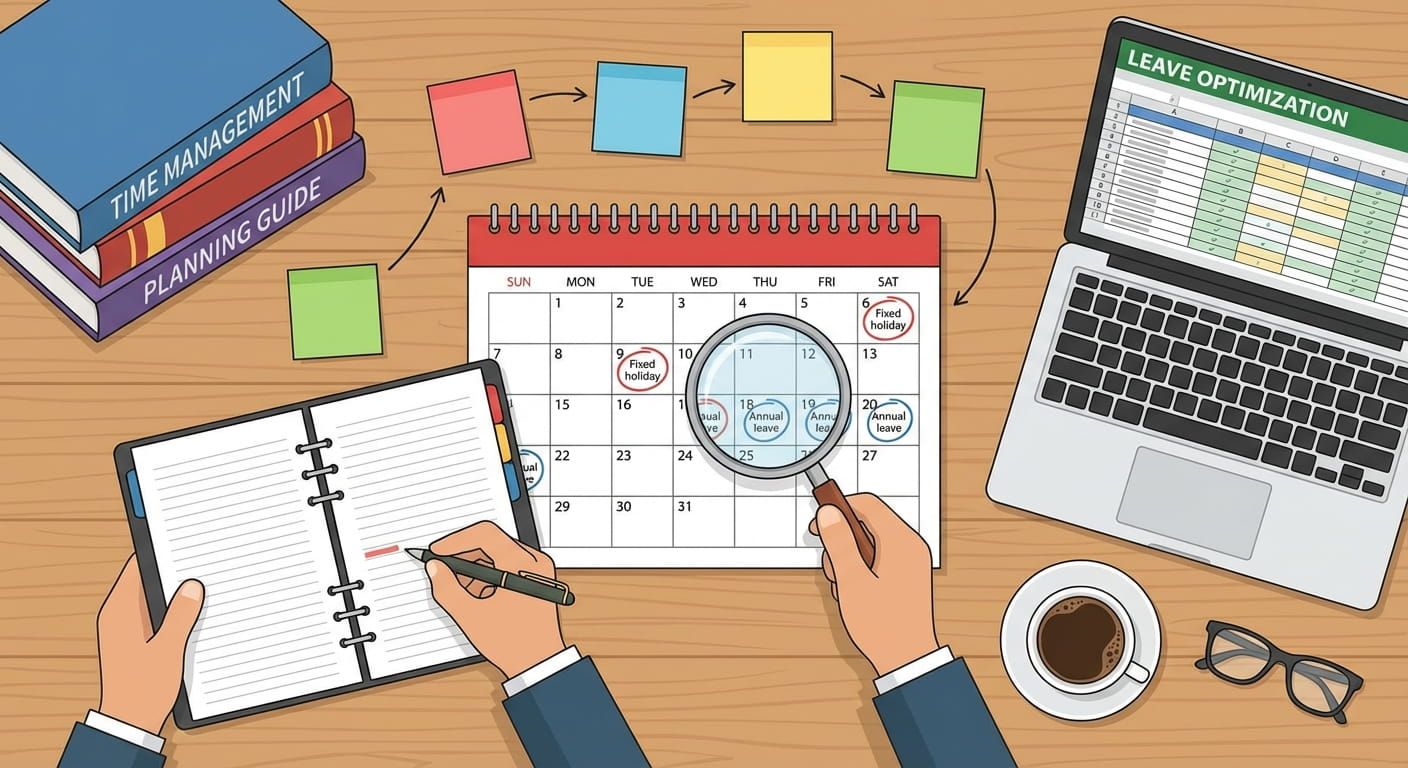
Holiday planning works best when it stays practical. Scan the next 30 days for each country involved. Mark major clusters. Then ask one focused question: which closure would break my plan if it happened? For travelers, that might be a visa counter, a transfer company, or a local transport schedule. For logistics, that might be customs, bank cutoffs, warehouse hours, or receiving docks.
Once you identify the fragile link, add a buffer or a backup. That is all. A simple habit, repeated, saves hours of waiting and days of delay.
A Final Note On Smooth Movement Across Borders
Public holidays are not obstacles, they are reality. Travelers can still have amazing trips during holiday weeks, and logistics teams can still deliver on time, as long as the plan respects local closures and human capacity. Check the calendar early, build buffers where approvals and releases happen, and keep your communication clear across time zones. The world keeps moving, and with a little holiday awareness, you move with it instead of getting stuck behind a closed door.